Controlling who can access your premises is one of the most effective ways to protect a business. Keys were once the default solution, but they come with problems that most organisations have experienced first-hand. Keys get lost, copied, shared, or forgotten, and once they’re out there, control is gone.
An access control system replaces that uncertainty with clear rules, digital records, and flexible management. Instead of hoping the right people have the right keys, access is granted intentionally, logged automatically, and adjusted when circumstances change.
At Integrated Security Services, we focus on professional commercial access control installation across New Zealand. This guide explains how access control works, the different types available, what influences cost, and why so many businesses now see it as a practical necessity rather than a luxury.
What Is an Access Control System?
An commercial access control system manages who can enter specific areas of a building, at what times, and under what conditions. Instead of physical keys, access is granted using credentials such as cards, fobs, PIN codes, or biometric data. Every access event is recorded, creating a clear audit trail.
In a commercial environment, this means businesses can control entry to offices, warehouses, server rooms, or restricted areas without relying on manual processes. Permissions can be changed instantly, rather than rekeying doors or replacing locks.
Modern commercial access control systems are designed to be reliable, scalable, and easy to manage. They allow businesses to grow, restructure, or adapt security without starting from scratch each time.
Types of Commercial Access Control Systems
There’s no single solution that suits every building. Different businesses have different layouts, risks, and operational needs, which is why access control systems come in several forms. The right choice depends on how the space is used and how much control is required.
Swipe card and fob systems are one of the most common options. They’re straightforward, cost-effective, and well-suited to offices or sites with regular staff changes. Lost cards can be deactivated instantly, avoiding the need for lock changes.
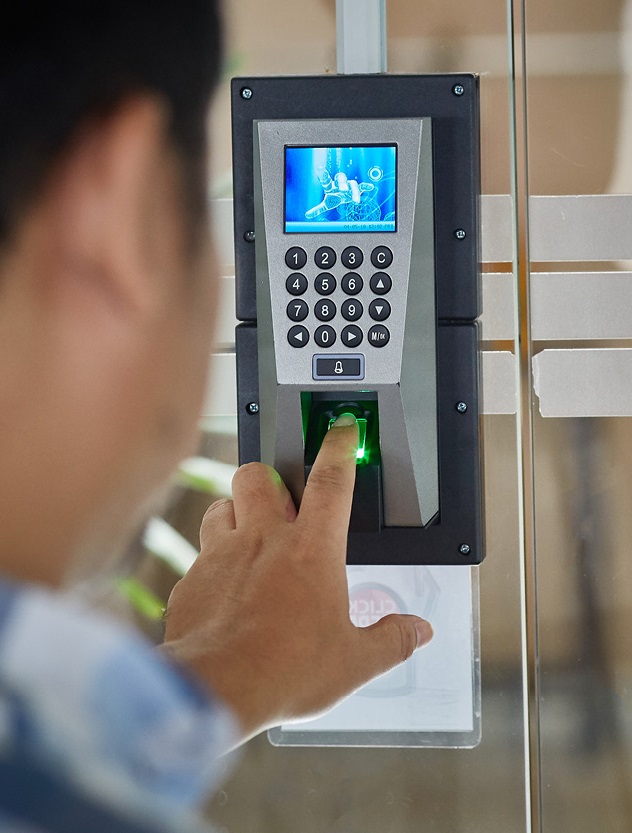
Keypad systems use PIN codes and are often used where issuing cards is impractical. Biometric access control, such as fingerprint or retina scanning, is typically used in higher-security areas where identity verification is critical.
Many commercial access control installations combine more than one method. This allows businesses to apply stricter controls to sensitive zones while keeping everyday access simple elsewhere.
Why Businesses Choose Commercial Access Control

Businesses turn to commercial access control because it gives them clear, practical control over who can access their premises, and when. Instead of relying on physical keys that can be lost, shared, or copied, access permissions are managed deliberately and recorded automatically. That extra visibility makes it far easier to keep unauthorised access in check and understand what’s happening on site.
It also takes a lot of friction out of day-to-day management. When staff join, move roles, or leave the business, access rights can be updated quickly without the hassle of reissuing keys or changing locks. For organisations that rely on contractors, temporary staff, or shift-based teams, that flexibility makes a noticeable difference.
Day-to-day operations tend to run more smoothly, too. When people have the right access at the right times, they can move through the building without unnecessary delays or confusion. Managers gain a clearer picture of how spaces are used, which helps with planning, safety, and overall workflow.
Over the longer term, access control helps reduce ongoing security headaches. Lost credentials can be disabled in seconds, lock changes become far less common, and access issues are easier to resolve. Rather than constantly reacting to problems, businesses gain a system that supports security and efficiency as they grow.
Access Control as Part of a Wider Security Setup

Access control works best when it’s planned alongside the rest of your security, not bolted on as an afterthought. In many commercial settings, it’s installed alongside home alarm systems, commercial CCTV, or intercoms so there’s a clearer picture of what’s happening across the site.
When systems are set up to work together, incidents are easier to understand and deal with. Access logs help confirm who was on site, cameras provide visual context, and alarms trigger a response at the right moment. That joined-up view cuts down guesswork and helps avoid unnecessary callouts or false alarms.
Instead of each system doing its own thing, integration makes security simpler to manage and more reliable day to day.
Is it Time to Invest in Access Control?
Access control isn’t about adding complexity; it’s about making everyday security easier to manage. When access is clearly defined, logged automatically, and simple to update, businesses spend less time reacting to problems and more time focusing on their work.
At Integrated Security Services, our commercial access control installations are designed to fit how your site actually operates. Doors, permissions, and access rules are set up to support your staff, not slow them down.
If you’re ready to move on from keys and gain clearer control over your premises, get in touch with our team, and we’ll help you put the right access control system in place.
Access Control NZ FAQs
No. Access control works just as well for small offices as it does for large commercial sites. Systems can be scaled to suit a single door or an entire facility, depending on what the business needs.
In many cases, yes. Door access control system installation can often be carried out using existing doors and hardware, provided they’re suitable. An on-site assessment helps confirm the best approach
Access permissions can be updated quickly through the system. Cards or credentials can be disabled instantly, and access levels adjusted without changing locks or reissuing keys.
Any business that needs to manage staff, contractors, or restricted areas benefits from access control. Offices, warehouses, retail back-of-house areas, healthcare facilities, and multi-tenant buildings all use access control to keep entry organised and secure without slowing people down